

Vintage tractors ploughing in the autumn sun.
Be a cultivated cultivator, ha de Gött!
Advertisements

Vintage tractors ploughing in the autumn sun.
Be a cultivated cultivator, ha de Gött!


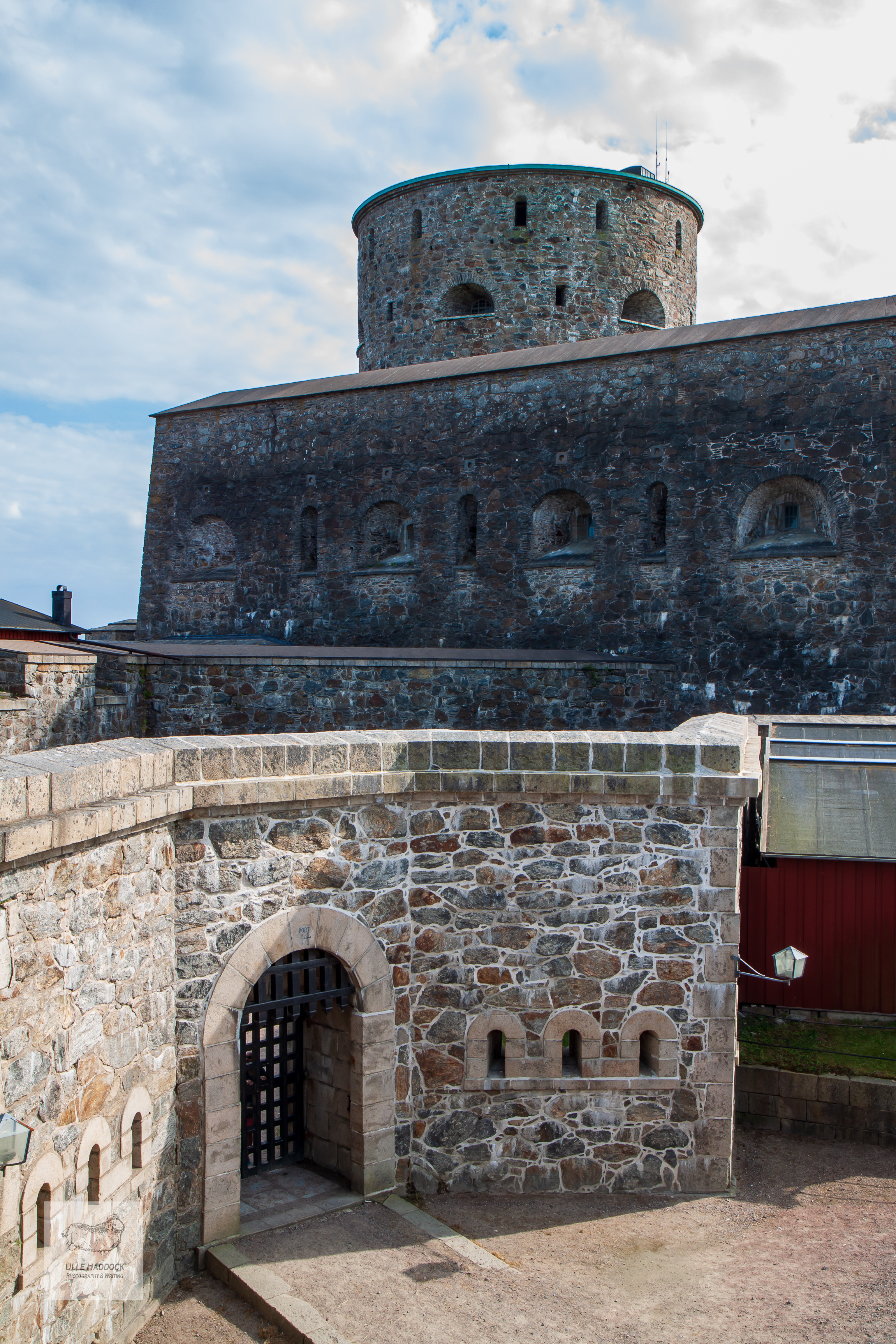

In mid 1800 Carlsten was considered the strongest fortress in Europe. Placed on the island Marstrand rock 39 meters over sea level and, with its tower reaching 98 meters it’s an impressive building. Construction began in 1658 after the peace treaty between Sweden and Denmark-Norway where Denmark-Norway had to surrender Bohuslän to Sweden. Marstrand was strategically important harbor with its strong currents keeping it ice free during the winter.
Like many fortresses in Sweden it has also served as a prison. In fact the entire fortress is built by the prisoners. The granite used for construction was landed by boats at the harbor in the village below and dragged up the hill by the prisoners. A sentence to hard labor at Carlsten was the same as a death sentence. Only way to leave was in a coffin. For my Swedish readers I strongly recommend the show and album by Stefan Andersson, No 90 Kleist, where he tells the history from the prisoners and soldiers perspective.
Not everything was war and punishment. It has also served as a lighthouse between 1780 until 1868 when the lighthouse Pater Noster replaced it. Carlsten lighthouse was equipped with the first rotating mirror invented by Jonas Norberg.
Let the old fortresses be a reminder that war is never the answer, ha de Gött!


The new Svinesund bridge over Idefjorden that marks the border between Sweden and Norway. Since Norway is not part of the European Union it is also an outer border for the EU. The bridge was built between January 2003 and was finished in May 2005. It’s a arc bridge with a length of 704 meters. The arc is 247 meters and has a sail free height of 55 meters.
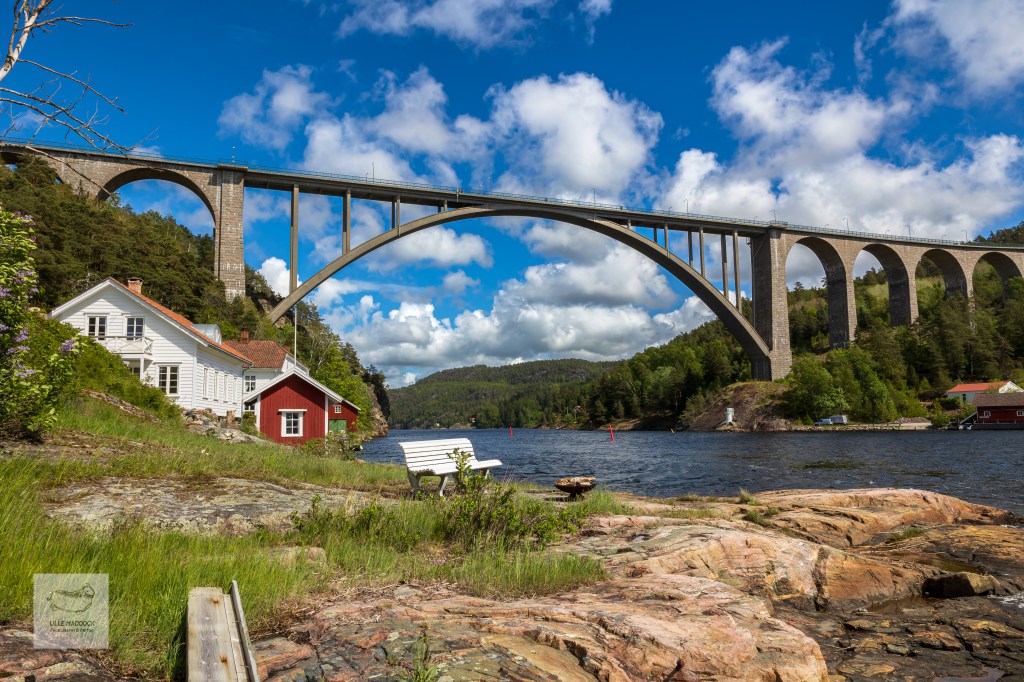
Turning 180 degrees from my standpoint at the old ferry harbor we find the old Svinesund bridge. Building of the bridge was started in 1939, but the Nazi invasion of Norway in April 1940 put a stop to the construction work. Instead both sides armed the almost finished bridge with mines and in 1942 a massive explosion on the Swedish side almost destroyed the bridge. Inauguration was finally in June 1946. With a length of 420 meters and a sail free height of 65 it’s an impressive beauty.
Build bridges and keep the borders open, ha de Gött!
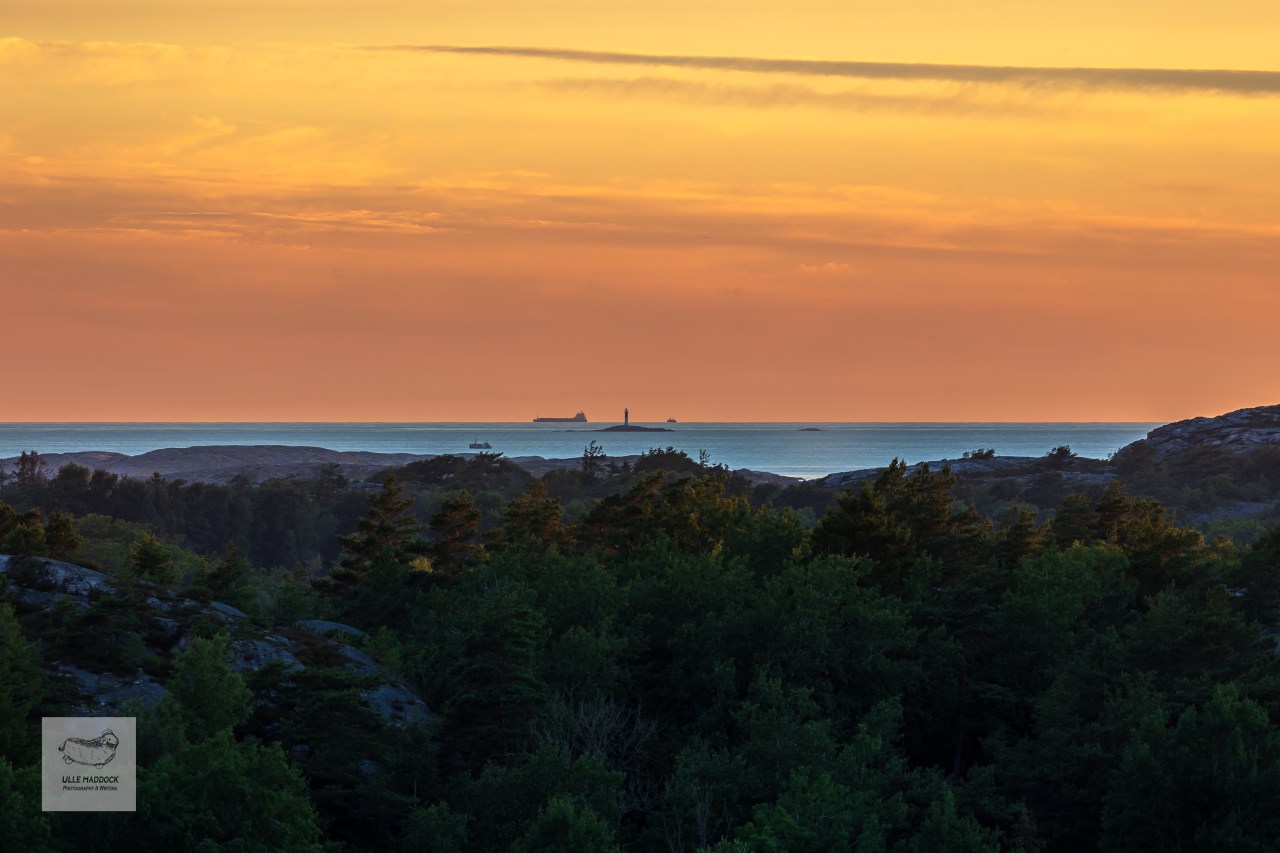
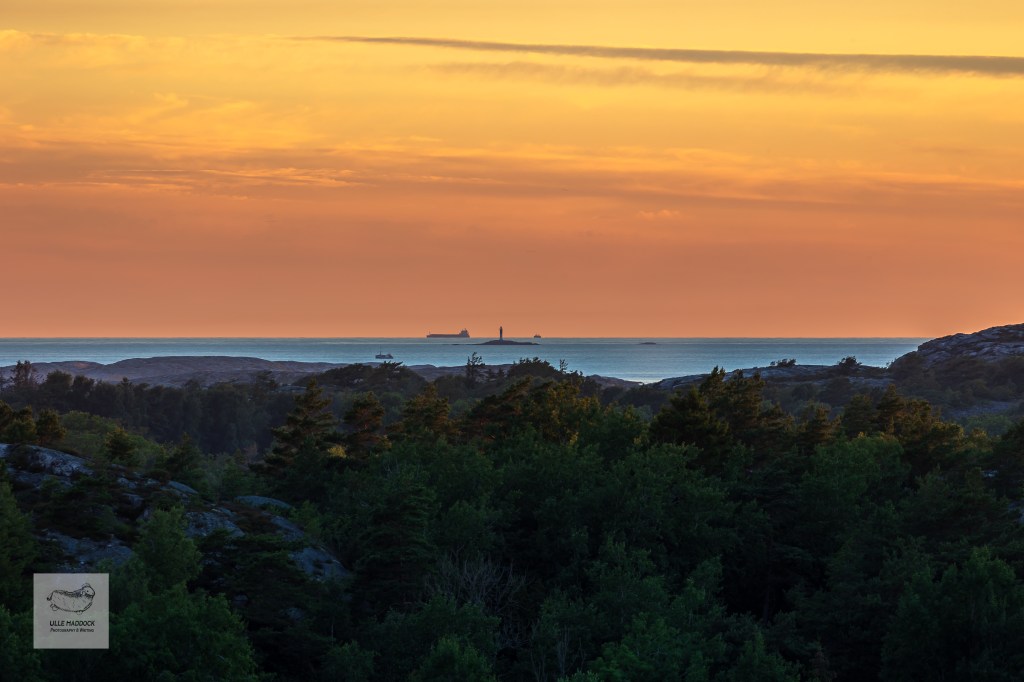
Late night sea traffic around Ramskär lighthouse. The 16 meter high lighthouse was built in 1917 with great difficulty on the naked black cliff. Situated 10 kilometer west of Havstenssund. The name Ramskär comes from the black rock. Ramn is ancient Nordic for raven. Hence raven black skerry.
See the light, be the light. Ha de Gött!


If there is one single thing that special Swedish it’s probably the Midsummer celebration. It’s always the first Friday after summer solstice.
For us Swedes midsummer’s eve is the true National Day where we celebrate the Swedish summer and the light. For most, the reasons for celebration are not very clear, but the tradition is very strong. Many activities for the whole family and especially the children, allowing grownups to behave like children for a while. There’s dancing around a pole, draped in birch leaves and the Swedish colors, singing silly songs while doing silly dances in a big ring. We use the same songs during Christmas, six months later but then around a fir-tree, still with the Swedish colors.
We eat the same thing for dinner, pickled herring, eggs, salmon in several varieties. Unique to the midsummer table is the fresh potatoes with a special kind of pickled herring, Matjessill. For dessert strawberries with whipped cream and to this, many drink snaps. To drink the snaps, we need to sing more silly songs in loud voices while standing up with raised glasses. As the evening goes and more songs have been sung the standing part gets more and more difficult.
The Swedish midsummer dinner must take place outside even with cold north winds and horizontal rain pouring down. More exercise after the dancing, running with the whole dinner table in and out between the rain showers. But what we always remember is the midsummer when the sun was shining, weather was warm all the way into the night. This year it actually was.
Traditions bring family and friends together and allow people to let go from life musts. Even the strictest civil servant can fool around for a while in what you can call dance, singing silly songs about how funny the little frogs are. I think the little frogs are laughing their legs off when looking at the civil servant!
Summertime and the living is easy, ha de Gött!

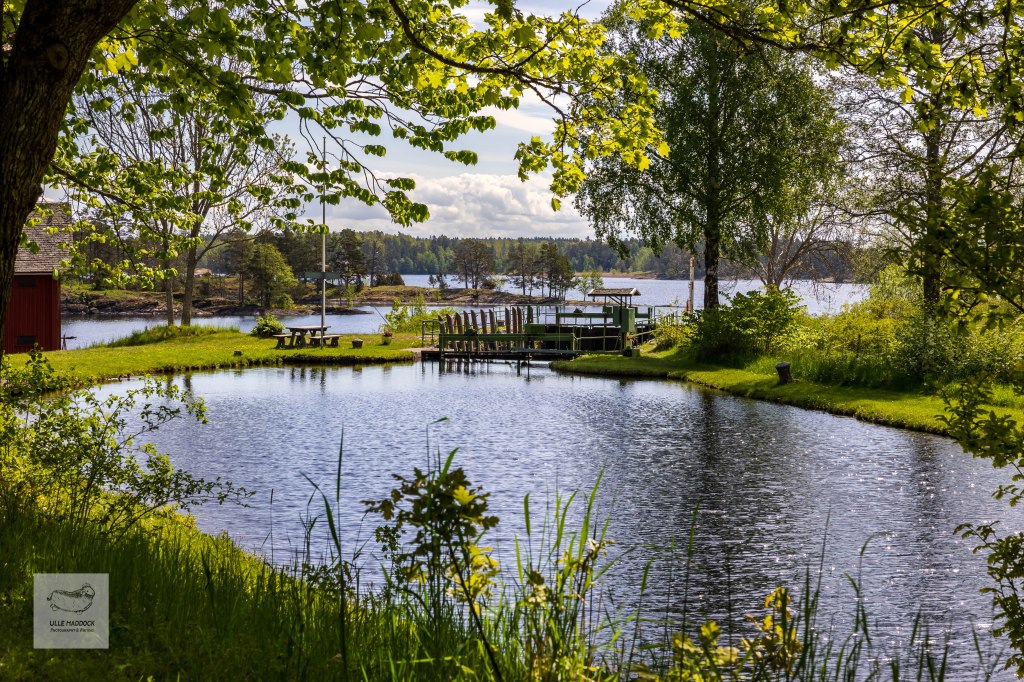
In Upperud there are two locks with a difference in altitude of five meters. This is part of Dalslands Kanal, (see previous post here). The first iron work of Dalsland was founded here in 1647 and in 1840 it was the largest in the area. In the old nearby mansion Napoleons niece, princess Christine Egypta Bonaparte lived together with her husband Arvid Posse.
Don’t let water get in your way, make a waterway. Ha de Gött!


On the fortress walls of Fredriksten Festning. Two cannons, tools of war. Protection or assault at the whim of a self-, or Grace of God appointed ruler. Human history, hard wired to self destruct. Enemy and brother.
Two cannons to frame this lanscape photo of Halden and Idefjorden. Squeezed between cannons, the prosperous city with peaceful trade. Open ports and safe passage between borders. Railroad tracks to travel near and far.
Two hundred years of peace between the nations, even if there was a bit tension when the union was dissolved in 1905. Let’s hope that these cannons only serve to frame pictures for two hundred more years. Serving as a beacon of peace all around the world.
War machines belong in museum, ha de Gött!

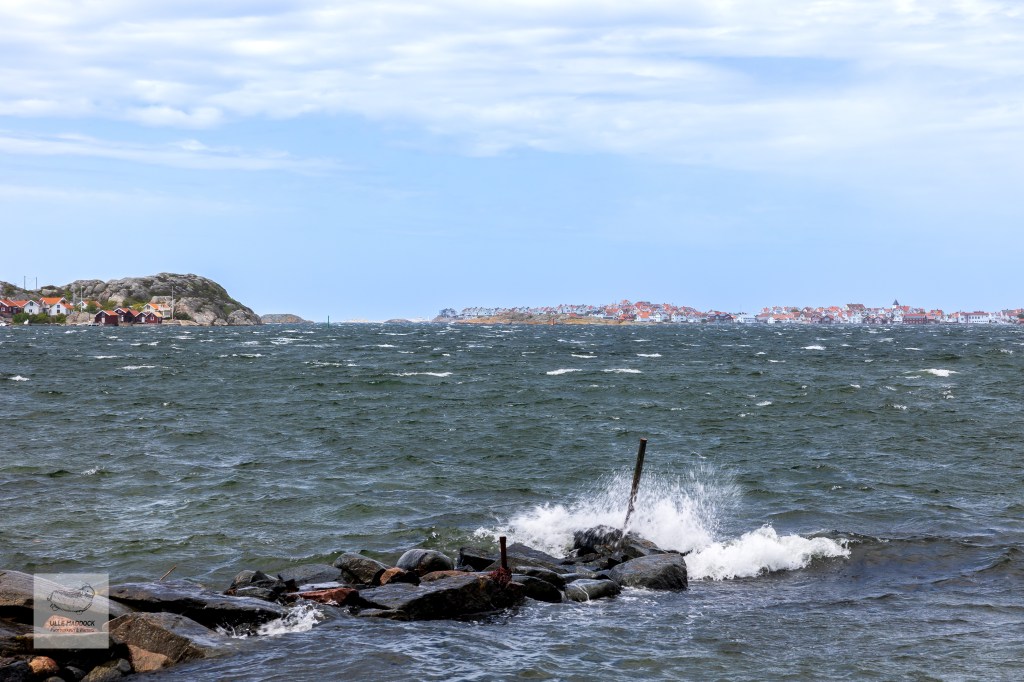
A windswept Klädesholmen in the distance. As many of the small island villages it is today mainly summer houses. It is believed to date back to the 1200 when the Norwegian king Håkon Håkonsson established many communities around Viken. Viken is an old name for Bohuslän and the coastline up to Oslo. There is a theory that the name for Vikings originates from this area.
Wind power, ha de Gött!


The 32,5 meter long aqueduct in Håverud is hold together by 33 000 rivets. Manufactured by Bergsunds Mekaniska in Stockholm. Not a single rivet has been replaced since the inauguration in 1868. It is part of Dalslands kanal, Canal of Dalsland that with a serie of locks connects the lakes from the larges lake in Sweden Vänern to Östervallskog in Värmland just one kilometer from the Norwegian border. By digging and blasting through the rock for 12 kilometers and waterway of 240 kilometers was created. With the canal in Trollhättan and the river Göta Älv goods could be transported to the port of Göteborg.

The work was a father and son project led by the brilliant engineers Nils Ericsson and his son Werner Ericsson. With 31 locks in 17 stations they created this blue highway through the deep forests of west Sweden. The jewel in the crown is the passage with the aqueduct and locks that cross the fierce waterfall in Håverud.
Something to reflect upon when looking at today’s climate challenges. Ha de Gött!
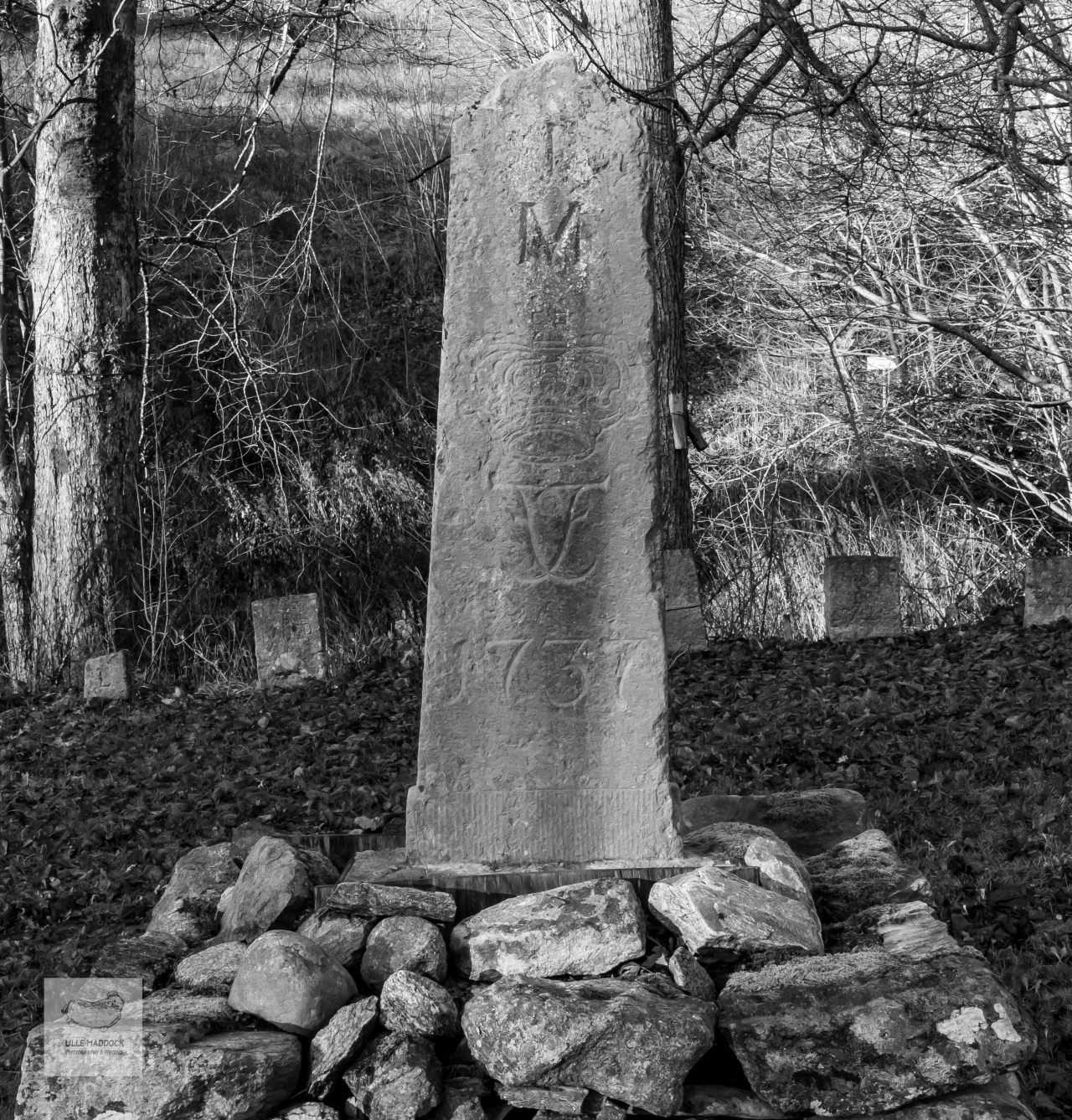

According to WordPress this is my post number 500. To write about milestones makes perfect sense.
Milestone originates back to the Roman Empire where they used them to mark the distance to Rome. Between each pole shaped stone, miliaria, the distance was one thousand dubbel steps, mille passus, approx 1483 meters.
In Sweden they were introduced by law in 1649 and was used until 1890. Back then local farmers was obliged to act as driver or supply horses for the nobles and officials travels across the kingdom. The milestones was introduced to create a way calculate a fair fee.
They used the Swedish mil that was 18000 alnar, cubit, that equals to 10688 meters. Today a Swedish mile is 10000 meters. If you ever get lost driving in Sweden and you get help with directions be sure to ask if they use Swedish miles.
Drive safe, ha de Gött!
 UlleHaddock