Tag Archive for ‘Photography’

Published

Published

Yes, it’s true I’ve got an article published in a local newspaper called Veckovis. It’s very local so I share it here with you. Written in Swedish originally so I hope not too much is lost in translation.

The Turquoise Bridge

At the top of Norra Bullaren where the lake turns into Enningdalsälven we find this beautiful turquoise pearl. This beautiful bridge is probably missed by most people who pass by on the Blue-Green road towards the Norwegian border. Nowadays, both the store and the petrol station are closed on the Swedish side. But if you stopp from nostalgic reasons, like me, and look down to the lake, you see it. As an avid hobby photographer, you are drawn to such beauty as bees to nectar-filled flowers. 

The narrow cast iron bridge with wooden carriageway were built almost 100 years ago. The proud logo from Götaverken, Gothenburg, is embedded in the turquoise together with the year 1926. A work like this must have songs and poetry dedicated to it, I thought. Happily, I threw myself over a famous search engine on returning home. All searches on bridge Vassbotten came up quite empty. Searches on Enningdalsälven resulted in more hits on Älgafallet.

Even though Älgafallet is mighty and makes the photographer’s motive sensors go off at full speed, it was a bridge I wanted to know more about. Here it was important to make a “Message Board” with the thoughts and try something new. Götaverken. For me, who was born in Gothenburg, it is above all a shipyard. My father, who by the way was from Holkekärr in Bullaren, worked there when I was a child. Yes that is correct. I’m half-bulling in the embezzlement, hence the nostalgic stop at the store. The bridge, Bullaren, Götaverken and Gothenburg felt a bit like closing a circle. 

Götaverken ceased all operations in 2015, but all documentation has been saved at the National Archives in Gothenburg. Using the well-known search engine, I came to the conclusion that there was an archive of bridges and viaducts. It was in cover number nine for the years 1905 – 1937. Tab 33 Wassbotten, highway bridge Bullarens Härad 1926. A small notice “reading room” meant that it was as far as I could get in the digital world.  

Like the Phantom, would I have to leave the deep forests and wide expanses to walk the streets of the city like an ordinary man? With a son studying to be a history teacher at the University of Gothenburg, I did not have to go into the big city. This did not go down well with the wife who missed out on a shopping trip, but it is important to prioritize. After brushing off the archive dust, the good son was able to share lots of information with me.

The contract, with order number 5836, states that the bridge must have a parallel span with a length of 30 meters and a free bridge width of 4 meters. “Materials holding the requirements for cast iron class B shall be used for the iron superstructure except rivets and bolts”. “The bridge parts are to be coated twice with lead paint”. The work was to be completed on 1 October 1926 and anchorages were to be prepared by the client no later than 15 August. The contract was signed 31 March 1926. According to the contract, the price was SEK 14,500 (€1450). According to Statistics Sweden’s Price Converter, this would correspond to SEK 430,000 today (€43,000)

Test loading of the bridge took place on 6 and 7 December 1926, by loading the bridge with a 35 cm thick layer of gravel. According to the calculations in the protocol, the load was then about 600 kg / m2. The bridge arched 17 mm on the southern beam and 21 mm on the northern beam. After the load was removed, the bridge returned to its original position. In the test print protocol, I discovered that the modern spelling of Vassbotten was used with a simple V and not W as in the contract. 

The search for more information continued through contact with the Swedish Transport Administration. A very helpful archivist produced the drawing. The drawing which was completed a week later on April 6, 1926. Drawing and subtitling are done by hand. The engineer has based his construction on the Royal Swedish Road and Water Agency’s standard drawings for road and railway bridges A17 and A20. I do not dare to interpret the engineer’s signature so his name will remain unknown. I wonder if he understood that the bridge would still be in use after almost 100 years. Here you can also read that the carriageway is made of wood. Load-bearing plank 4×4 inches and wear surface plank in the dimension 2×5 inches. 

I also received information from the Swedish Transport Administration that a renovation and reinforcement had been done in 1956. Wooden planks and steel parts were replaced. The drawing shows that “all wood except the wear plank is impregnated with arsenic and creosote preparations”. “New steel parts are coated with lead paint and coated twice with anti-corrosion paint”. Here too, we can see changes through the history of the bridge. The dimensions of the wooden plank are here stated in millimeters, 50×125.  

Lots of technology here so we return to the bridge’s beautiful appearance. Such engineering needs attention and I hope I got someone to look a little extra next time they pass. Maybe someone has been inspired to write a song about it.

Be a bridge over someones troubled waters, ha de Gött!

Advertisements

Dance, dance

Dance, dance

First dance competition since Covid-19 and my sons first competition in Cha-cha and Jive. Also the first time for me to take photos of dancers. The family has some ten years experience in the dance halls. Both sons competing, but then it was the Rock’n’Roll dances. Back then my wife held the camera for the still images and I was in charge of the video camera. So yesterday was same, same but different.

Dance like there’s no tomorrow, ha de Gött!

Advertisements

Gale

Gale

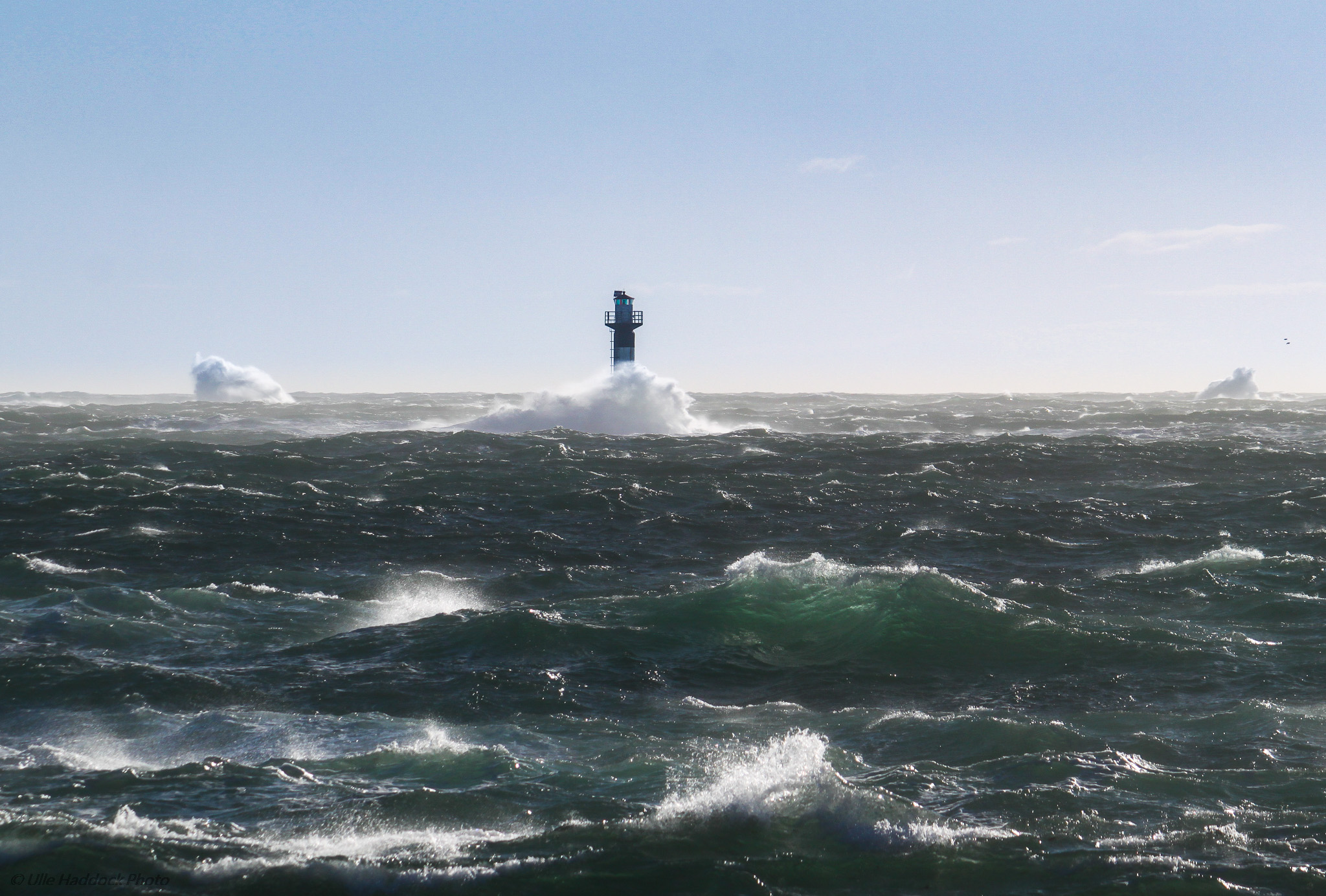
Exploring more with color, black and white. This picture was taken in a very tricky light coming in behind me from the low standing November sun. Just bursting through the rain clouds for a few minutes. There is a mood in this picture and after taken an online photography training I like to explore how, or if, the mood changes going to black and white.

What do you think? (If you open the website you can use the slider to compare, not sure it works in the WP reader). Ha de Gött!

Advertisements

Cocooning

Cocooning

Days are short and when the weekend comes it rains. Winter this far north is not optimal. Time too learn more about editing the brighter seasons photos. Today I share a slide show with some of this years pictures.

Always learn, ha de Gött!

Advertisements

Beach life

Beach life

The water surface shimmers with green and blue. Waves break, softly against the yellow and brown sandy beach. A small splash as water hit a stone embedded in the soft sand. One lonely seagull lands gracefully in the water, to check the visitor out. Driftwood washed up by the latest storm. Private beach, time for a skinny-dip.

8°C in the air and 8°C in the water. I already got a cold so I stayed on the beach. Ha de Gött!

Advertisements

Red Fungi

Red Fungi

November can be very dull and gray, but if you look close. Look close to see the bright colors hidden on the ground. If you’re lucky the sun lights up and create dramatic, long shadows.

I don’t know the name of this red little fungi but I hope Rudi can help. Do check out his blogg and his fungi knowledge, picpholio nature photography.

Watch where you’re going, ha de Gött!

Advertisements