Archive for ‘Travel’

Näcken

Näcken

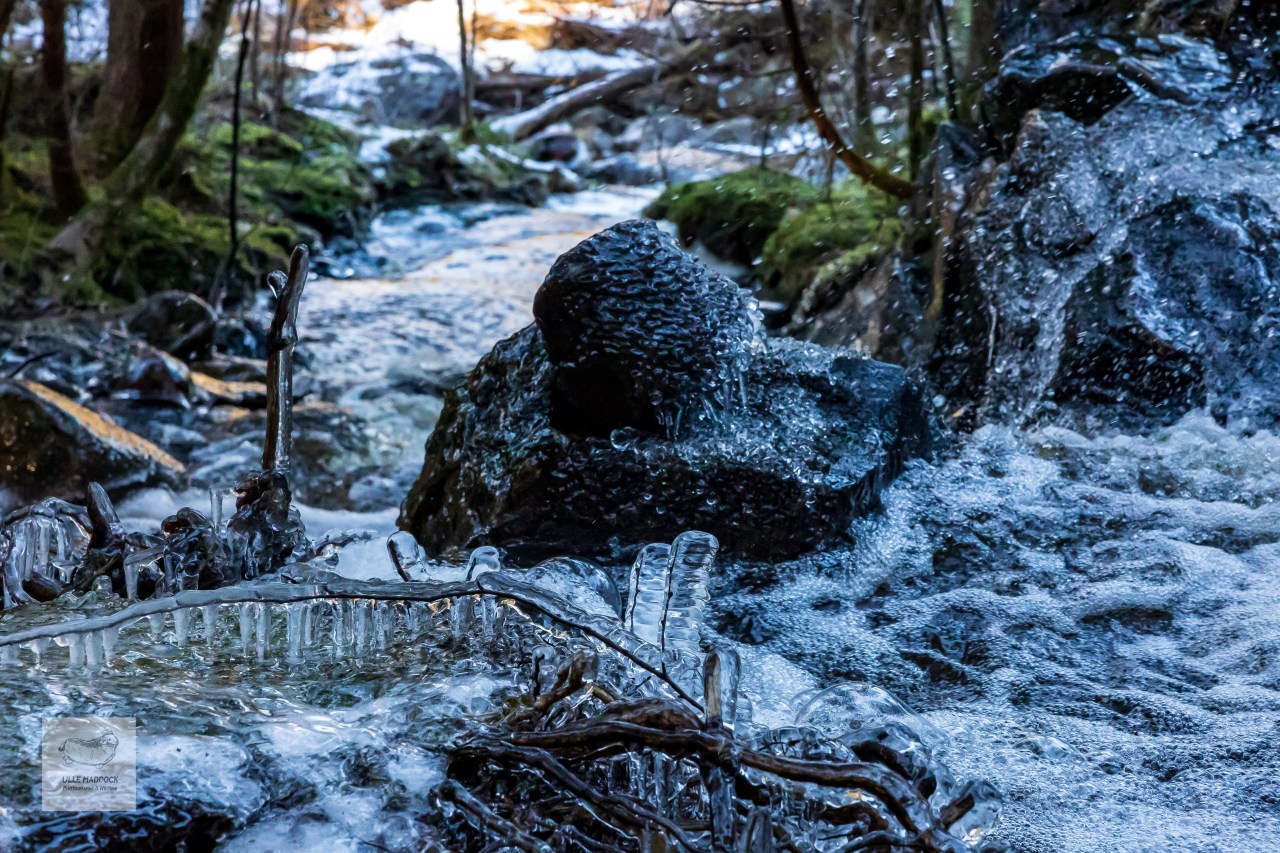
Näcken is a humanoid shape shifting water spirit in Scandinavian folklore. He appears in all Germanic peoples folklore and the English name is Nicor. Näcken sits in the stream or a lake and tries to lure innocent people, mostly young women and children to drown. He does this by playing the Violin, the Devils instrument. There is also female Näcken that lures young men to the same fate.

Näck translated to English means, nude. Yes, it’s true we Scandinavians living in the country side love to do some nude swimming, specially after the Sauna bath. After all, there is usually not very many around to see you.

One dress makes us all equal, ha de Gött!

Advertisements

Rusty

Rusty

Rusty ball-bearing in dire need of some lubrication.

Leonardo Da Vinci is by some named the inventor of the ball bearing but the already the Romans used wooden ball bearings. The first modern ball bearing was patented by Philip Vaughan, a Welsh inventor, in 1794.

Sven Wingquist, a Swedish inventor invented a self-aligning ball bearing in 1907. This revolutionary invention became the foundation for one of Sweden’s most successful international companies, SKF. SKF stands for Svenska Kullager Fabriken, simply Swedish Ball Bearing Factory.

My first two and half years I lived across the street from the huge factory with its fasade of red clay bricks. Now a trip to Gamlestaden in Göteborg must be planned for some photos.

Aim for a smooth ride, ha de Gött!

Advertisements

Little Docklands

Little Docklands

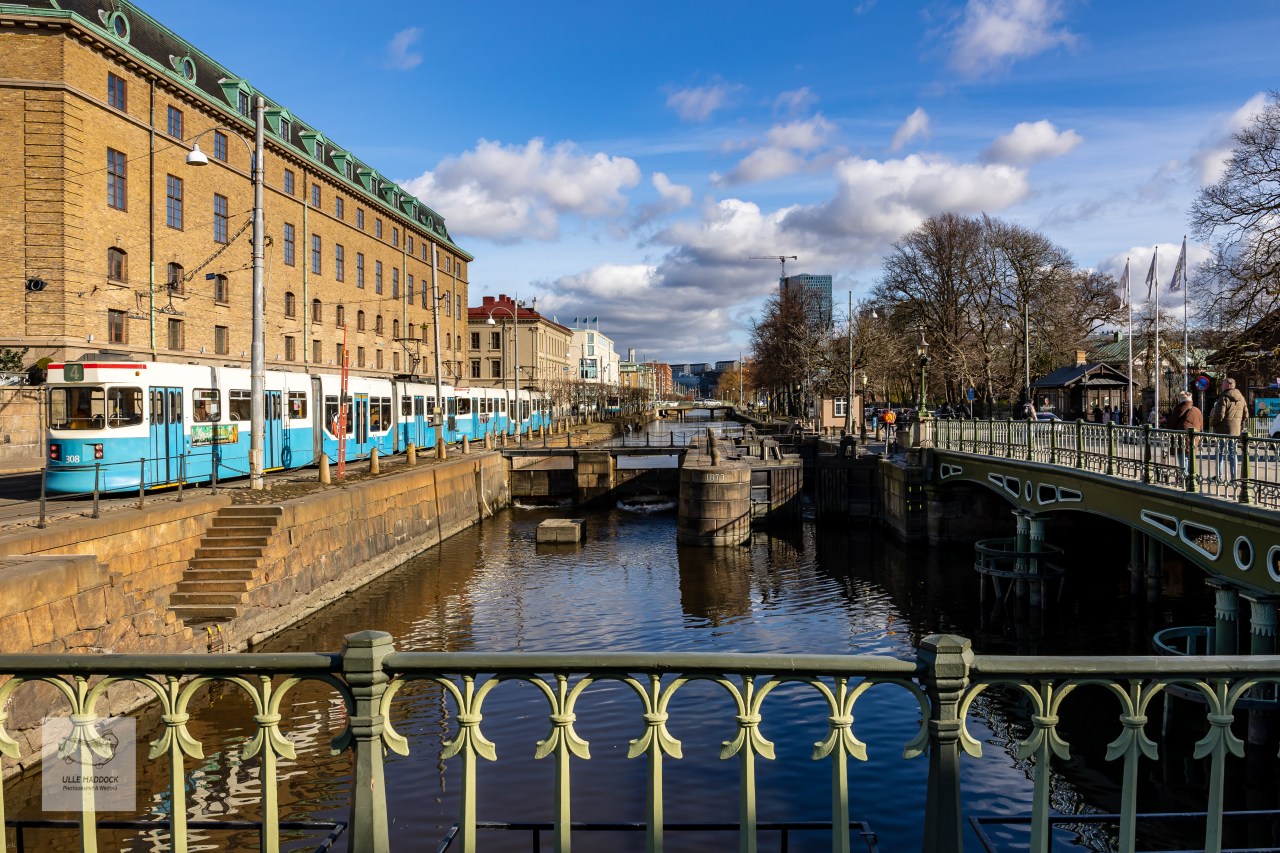
Göteborg has a nickname, Little London. This stems from the era with large shipyards and industrialization during the 1800. The trade over the North Sea has always been intense and many British businessmen and craftsmen saw opportunities in Göteborg. English was as common as Swedish in the streets. Chalmers University of Technology is one of the institutions founded by a British businessman.

The picture is taken at Lindholmen where Chalmers has one of its campus. The water in the picture is the dry dock (not so dry now) from the shipyard. Like Docklands in London the area is transformed to a modern business area with skyscrapers, hotels and smart dressed business people. Chalmers Campus creates a hightech hub and you will find many well known international companies here. Just note the white autonomous drive cars parked to left in the picture.

The tower being built in the background is the Karla Tower. When it’s ready in 2024 it will be 245 meters high, highest building in Sweden. The building tempo adds one floor per week.

Try to rise above, ha de Gött!

Advertisements

Cranes

Cranes

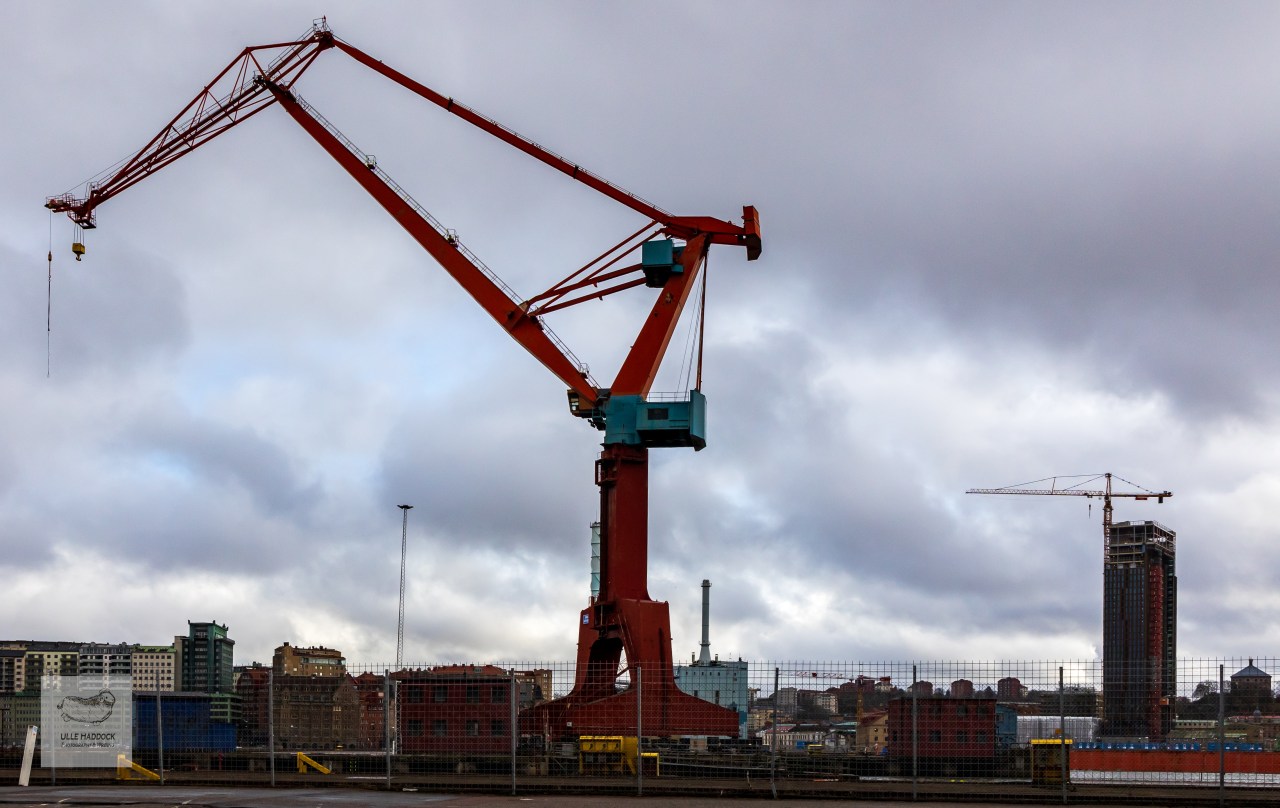
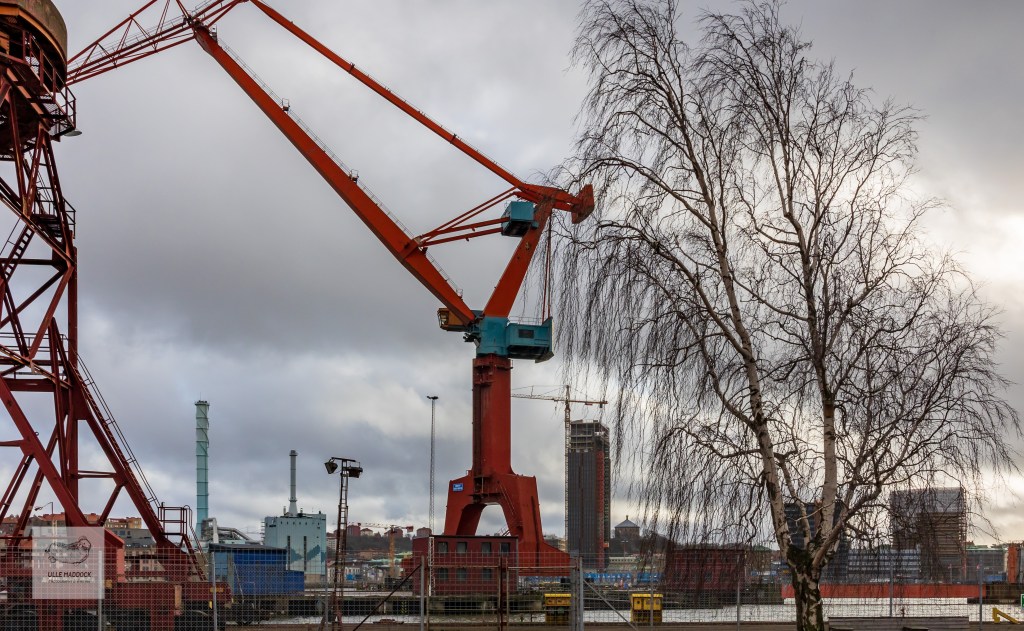
A city is in constant change. The old cranes in the old shipyard was, and still is, a symbol of progress and pride. It put Göteborg on the international map as a place of advanced engineering and craftsmanship. In the background the modern cranes building skyscrapers. They manifests confidence and trust in the future. Not bad for an old fortress town built in a swamp.

I had the opportunity for a photo session in Göteborg today between the rain showers. As I live in the country side, city photography is not a skill I get to explore much. The old cranes from the shipyard Götaverken is one of the things I long wished to photograph. I write about my connection to Göteborg in an older post you can find here.

Impossible is a question of will, ha de Gött!

Advertisements

Free Space

Free Space

Empty boat moorings waiting for the summer in a winter cold small town landscape. Harbor side walk is empty. No problem with social distancing. No troubadour leading a sing-along crowd in front of the outdoor scene. No late night, hot dog or hamburgers served in the take away. But six months from now. Grebbestad, the place to be.

Enjoy every season, ha de Gött!

Advertisements

Communication

Communication

Invisible vibrations through the air, like telepathy. Waves of communication. Satellites circling the planet like wasps. Information and big data, internet of things, radio ga-ga, television. Smarter and dumber than ever in history, never lonelier.

The huge satellite dishes in the picture has a diameter of 32 and 30 meters. Tanum Teleport was built in 1971 for telephony and data transfer with the help of satellites as relay stations. The first videophone call over the Atlantic Ocean was made on the inauguration day 18 December 1971. A hightech landmark to manifest Sweden’s ambition to be a Information Technology nation to reckon with. Still stand as a landmark today but the facility, at peak employing 30 persons, was closed 2002. The facility played a part as the predecessor to Internet, Arpanet, in 1973 establishes its first international satellite link. Transfer rate of whopping 2,4 kbps.

We have two ears but only one mouth. Should we not listen twice as much as we speak! Ha de Gött!

Advertisements

Grebbestad

Grebbestad

The village Grebbestad with 2000 year-around residents, was first mentioned in the beginning of 1600. Like many of the small villages in Bohuslän the development is linked to the herring- and granite mining periods. Today it is a seaside resort with an exploding population during the summer holiday season. Exploding in number of residents, otherwise it would be quite noisy during summers if the population actually blew-up.

Already in 1844 it became an official seaside resort with both cold and hot bathhouse. The mud bath was considered very healthy. The sheltered harbor was also good for trade and shipping. In 1858 there were 7 cargo ships registered in Grebbestad.

A cannery was established in 1870 and even if the cannery is closed since many years the brand name is still used. In the building a micro brewery today makes a very good beer. The first motorized buss line in Sweden was established in 1911, between Grebbestad and the railway station 5 kilometers away.

Don’t get stuck in the mud, come clean, ha de Gött!

Advertisements

Tjärnö

Tjärnö

The small island Tjärnö with a view to the northeast. Behind the island lie the Kosterfjord. Kosterfjord is not really a fjord but a deep underwater valley with a depth of 250 meters. On the Tjärnö island is also a marine biological research center linked to the University of Gothenburg. It’s open to the public so they can learn more about the unique environment in the Kosterfjord.

I struggled a bit to get the color saturation right as the thick clouds hardly let any light through. At first the picture came out very blue. Even if it was cold it was not that cold and I wanted the picture a bit warmer. Now I hope it’s reflecting -3°C and no wind.

Don’t be blue, connect. Ha de Gött!

Advertisements

Fishing port

Fishing port

The small port in the fishing village Resö a cold winters day. Thermometer showing -4°C but with the wind at gale strength coming in from northeast the cold effect is -10°C. The hardships of the fearless photographer.

The small village shares its name with the island it’s situated on. 170 people live here year around but in summer this number goes up significantly. The trawl fishing boats gets crowded by leisure boats in the sheltered harbor. The island is also accessible by a narrow winding road. Here is also one of the ‘gates’ to the first national marine park in Sweden, Kosterhavet National Park.

This little squirrel also live in Resö.

Keep warm, wear Long Johns, ha de Gött!

Advertisements

Rush hour

Rush hour

Rush hour in Havstenssund. The autumn evening shadow gently cover the houses, as the sun sets behind the cliffs. The little village prepare for the winter. Lobster fishermen moor their boats in the harbor. There is a chilly wind but in the street it is calm, sheltered by the houses and the white fences. Take a left to the gorge or go straight down to the harbor. Smell the fresh salted wind and listen to the boats tough by. Feel alive.

Breath in breath out, ha de Gött!

Advertisements