Tag Archive for ‘History’

Writing inspired by history.

Little Docklands

Little Docklands

Göteborg has a nickname, Little London. This stems from the era with large shipyards and industrialization during the 1800. The trade over the North Sea has always been intense and many British businessmen and craftsmen saw opportunities in Göteborg. English was as common as Swedish in the streets. Chalmers University of Technology is one of the institutions founded by a British businessman.

The picture is taken at Lindholmen where Chalmers has one of its campus. The water in the picture is the dry dock (not so dry now) from the shipyard. Like Docklands in London the area is transformed to a modern business area with skyscrapers, hotels and smart dressed business people. Chalmers Campus creates a hightech hub and you will find many well known international companies here. Just note the white autonomous drive cars parked to left in the picture.

The tower being built in the background is the Karla Tower. When it’s ready in 2024 it will be 245 meters high, highest building in Sweden. The building tempo adds one floor per week.

Try to rise above, ha de Gött!

Advertisements

Cranes

Cranes

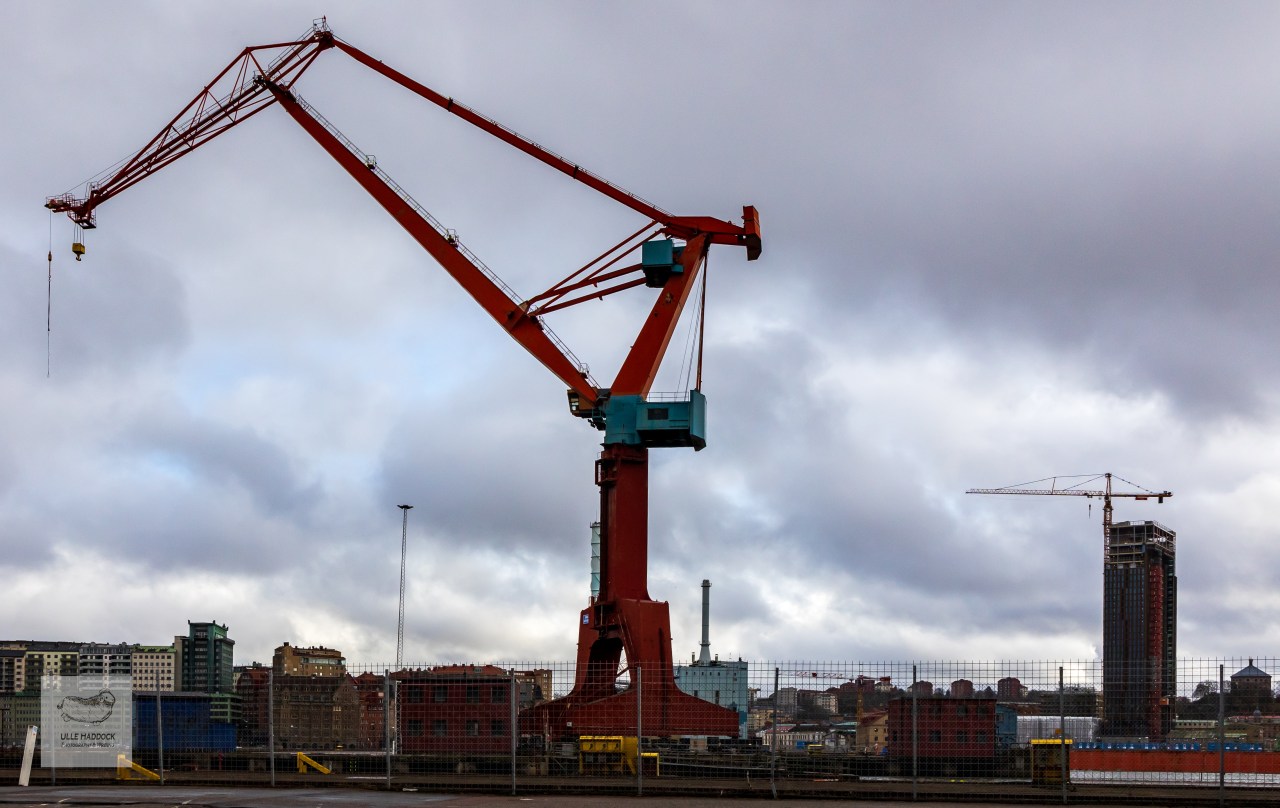
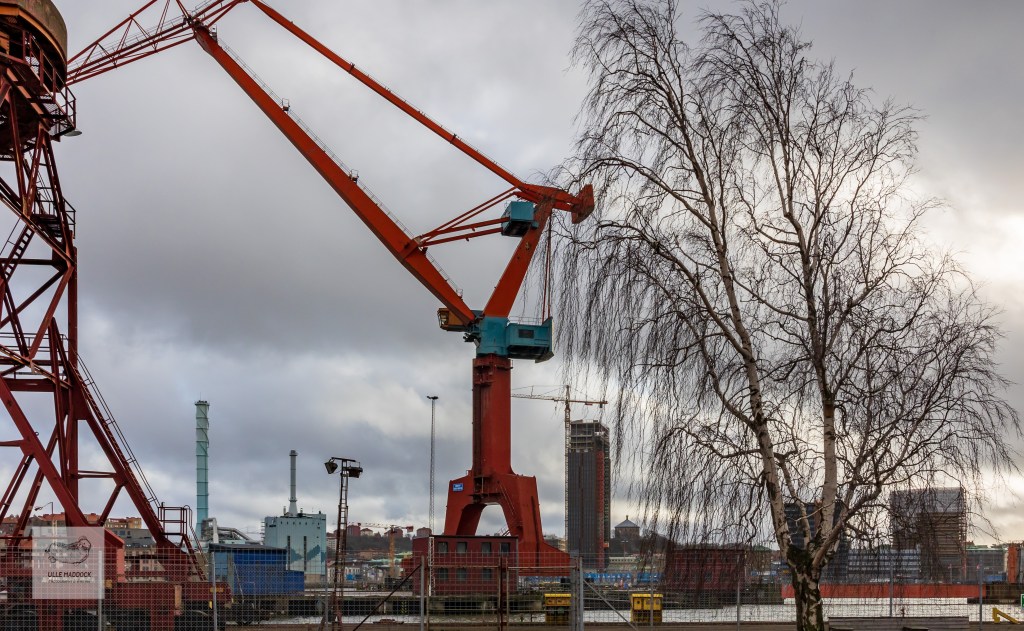
A city is in constant change. The old cranes in the old shipyard was, and still is, a symbol of progress and pride. It put Göteborg on the international map as a place of advanced engineering and craftsmanship. In the background the modern cranes building skyscrapers. They manifests confidence and trust in the future. Not bad for an old fortress town built in a swamp.

I had the opportunity for a photo session in Göteborg today between the rain showers. As I live in the country side, city photography is not a skill I get to explore much. The old cranes from the shipyard Götaverken is one of the things I long wished to photograph. I write about my connection to Göteborg in an older post you can find here.

Impossible is a question of will, ha de Gött!

Advertisements

Fortress

Fortress

It is called the Queens Mountain, Drottningberget in Swedish, and it is an ancient fortress. More accurate a hill-fort. The natural form of the rock is what create the attributes of a fortress. There is very little man made constructions made. The height and the flat plateau on the top together with the availability of water made it perfect to stand ground. I have no idea where the royal name come from but maybe there was a female ruler in the settlement.

44 meter up surrounded by steep cliffs it was an easy place to defend by simply throwing stones in the head of the attacking enemy. I wonder if this is why the soldiers helmet was invented, still used today. There is only two ways up without any climbing gear, trust me I’ve tried. Here you can see some remains of walls and collected throw size stones. With the sea level a few meters higher up it was most likely attackers came from the sea.

Keep it simple, ha de Gött!

Advertisements

Net hut

Net hut

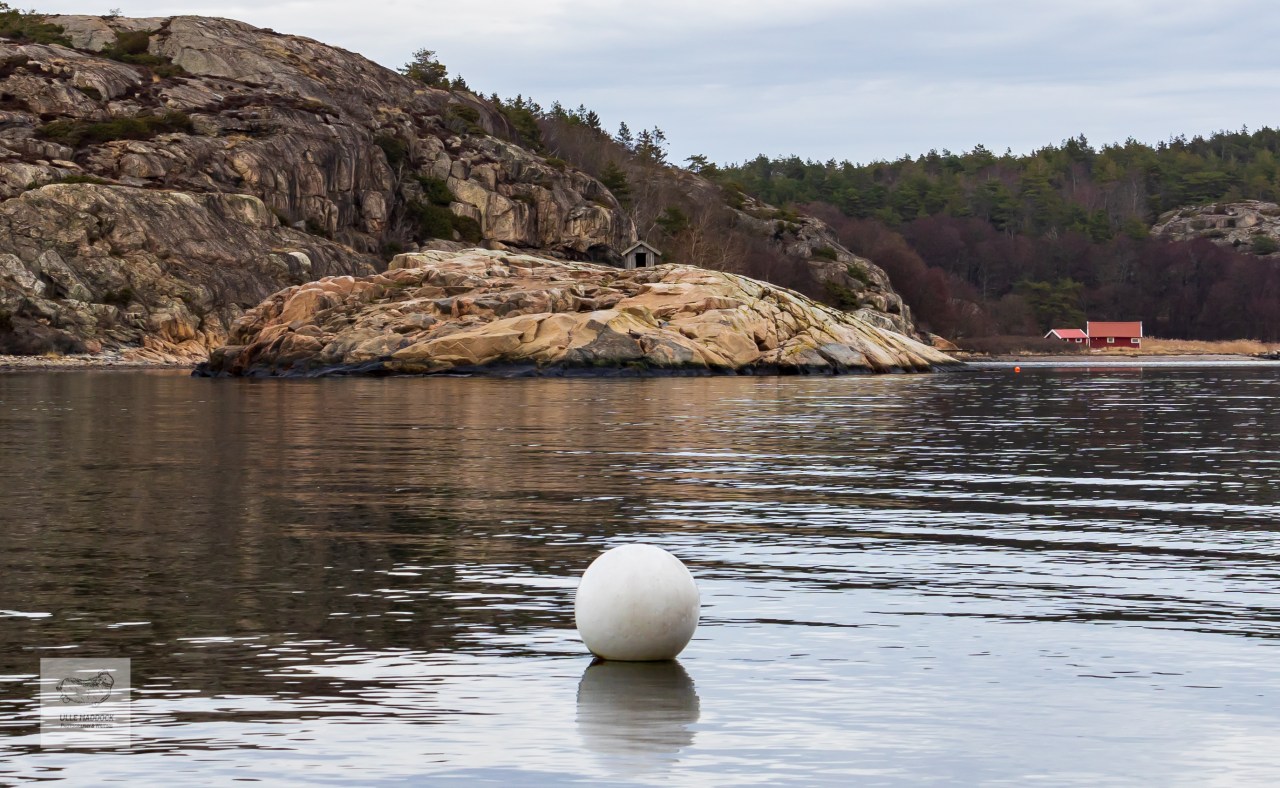
The little hut on the island was in the past used as storage for the fishing nets. The nets was dried in the sun on the cliff before storage. It was placed on an island the keep rodents away. This one is quite small but there are larger ones out on the bigger islands where the fishermen could stay over night.

Stay afloat in the interweb, ha de Gött!

Advertisements

Grebbestad

Grebbestad

The village Grebbestad with 2000 year-around residents, was first mentioned in the beginning of 1600. Like many of the small villages in Bohuslän the development is linked to the herring- and granite mining periods. Today it is a seaside resort with an exploding population during the summer holiday season. Exploding in number of residents, otherwise it would be quite noisy during summers if the population actually blew-up.

Already in 1844 it became an official seaside resort with both cold and hot bathhouse. The mud bath was considered very healthy. The sheltered harbor was also good for trade and shipping. In 1858 there were 7 cargo ships registered in Grebbestad.

A cannery was established in 1870 and even if the cannery is closed since many years the brand name is still used. In the building a micro brewery today makes a very good beer. The first motorized buss line in Sweden was established in 1911, between Grebbestad and the railway station 5 kilometers away.

Don’t get stuck in the mud, come clean, ha de Gött!

Advertisements

Greby Grave Field

Greby Grave Field

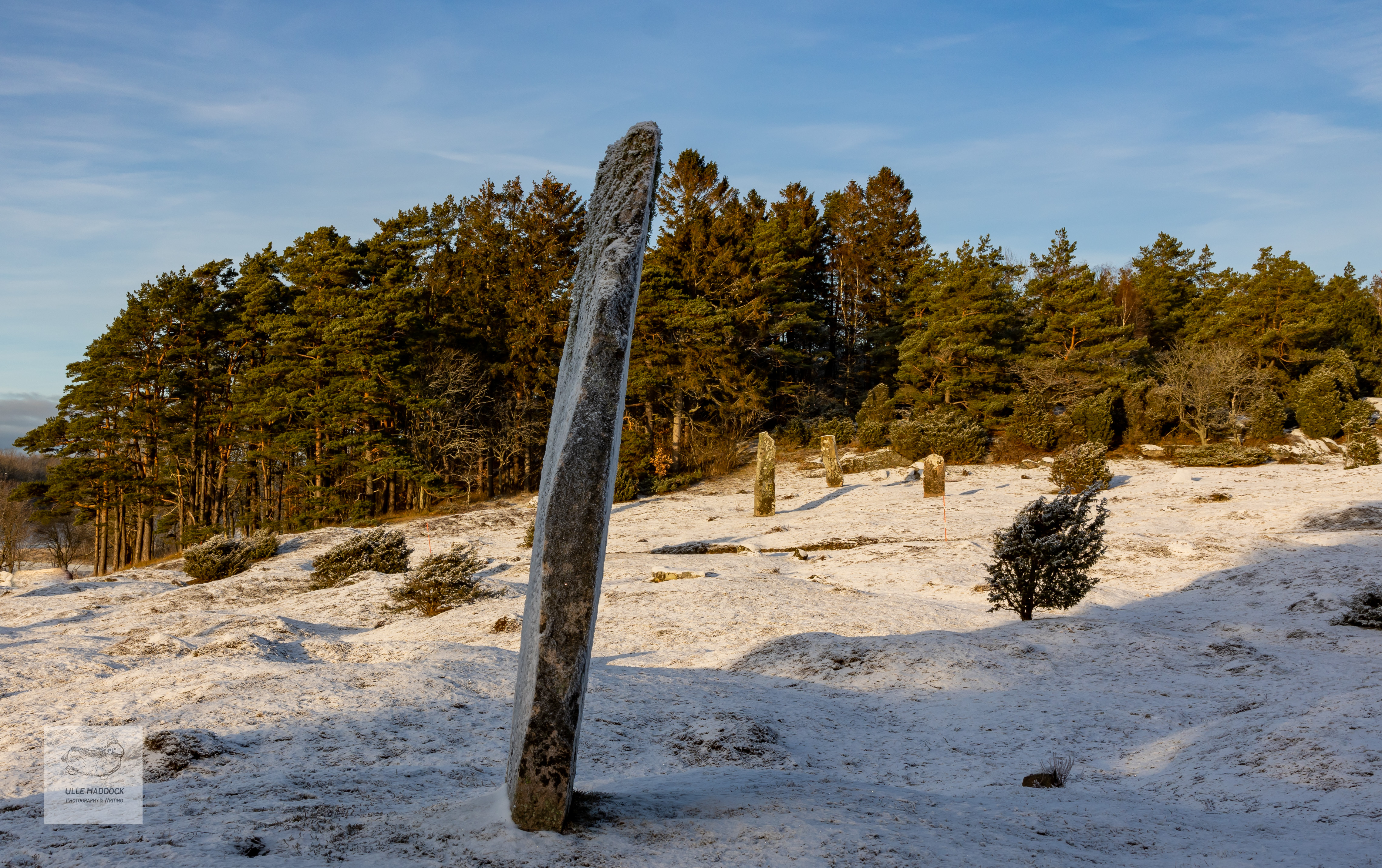
Outside the small town Grebbestad lays the Greby grave field. Even if it’s unique for this area there is not much known. There are around 200 graves that dates back to Iron age, year 200 – 600. Many of the burial mounds have large stones at the top. Very few excavations has been done but in 1873 historian Oscar Montelius examined ten of the burial mounds.

He found in almost all graves an urn with burned bones often with some small objects like a bone comb or glas beads. Ceramic vessels with an ear and a glass bead molded in the bottom. This type of pottery has been found in England and Germany. This suggest that this burial site was connected to a trading place.

There is an interesting legend that was told to one of the disciples of Carl von Linné, Pehr Kalm who visited in 1742. According to this fishermen from Scotland visited the area during the herring periods. Legend has that a Scottish army invaded and raided all the way to Bullaren 25 kilometres inland. A local army defeated them in two battles where the final one stod at Greby. None of the Scotts made it home and their remains was buried here. There is however no evidence found for this.

Come in peace, get home in one piece, ha de Gött!

Advertisements

Merry Julblot

Merry Julblot

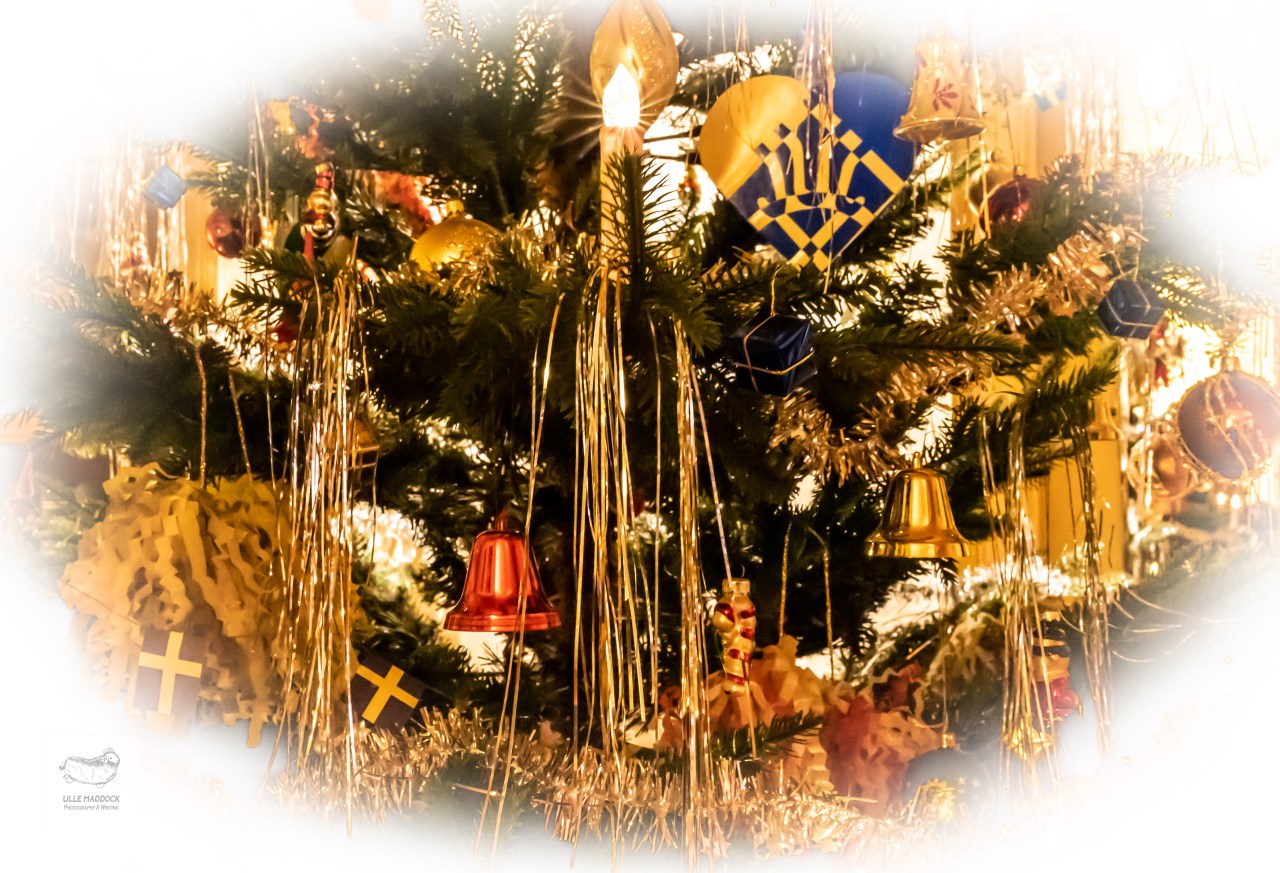
Christmas is upon us with all its traditions. Even if we think it’s the same every year there is change. Maybe not so fast but it’s there. In English it’s called Christmas referring to the celebration of the birth of Gods son. Makes sense but I wonder if Christmas has been taken hostage by the commercial forces and if that is not the new religion. It is not the first time a new religion builds on, and take over old traditions.

Thousand years ago the pagan Viking’s celebrated Yule blot to honor Odin, the All Father. There is som debate among the historians if this twelve day festival was celebrated at the same time as Christmas or in mid January. It is also referred to as ‘midwinter blot’. Some say that it was first celebrated in mid January and moved in the mid 900 by King Håkon I of Norway to fit the Christian celebration. This was done as an effort to convert the Vikings to Christianity by the already converted Håkon.

In Swedish we say ‘Jul’ for Christmas and in old Norse language it was the name for Odin. Odin being the most important God in Nordic mythology. The word ‘blot’ means sacrificing to the Gods. The ceremonies and ritual killings of animals was a blood dripping event. Drinking of fresh raw blood and splashing over the crowd must have been quite a scene. Luckily it was all washed down with lots and lots of mead.

Be traditional, create new traditions, ha de Gött!

Advertisements

Published

Published

Yes, it’s true I’ve got an article published in a local newspaper called Veckovis. It’s very local so I share it here with you. Written in Swedish originally so I hope not too much is lost in translation.

The Turquoise Bridge
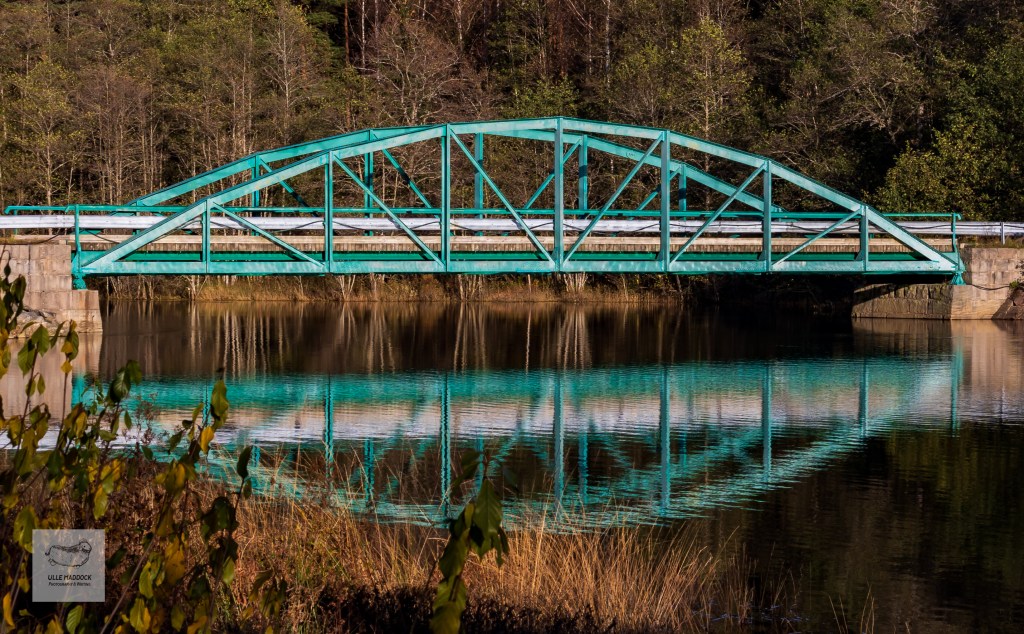
At the top of Norra Bullaren where the lake turns into Enningdalsälven we find this beautiful turquoise pearl. This beautiful bridge is probably missed by most people who pass by on the Blue-Green road towards the Norwegian border. Nowadays, both the store and the petrol station are closed on the Swedish side. But if you stopp from nostalgic reasons, like me, and look down to the lake, you see it. As an avid hobby photographer, you are drawn to such beauty as bees to nectar-filled flowers. 

The narrow cast iron bridge with wooden carriageway were built almost 100 years ago. The proud logo from Götaverken, Gothenburg, is embedded in the turquoise together with the year 1926. A work like this must have songs and poetry dedicated to it, I thought. Happily, I threw myself over a famous search engine on returning home. All searches on bridge Vassbotten came up quite empty. Searches on Enningdalsälven resulted in more hits on Älgafallet.

Even though Älgafallet is mighty and makes the photographer’s motive sensors go off at full speed, it was a bridge I wanted to know more about. Here it was important to make a “Message Board” with the thoughts and try something new. Götaverken. For me, who was born in Gothenburg, it is above all a shipyard. My father, who by the way was from Holkekärr in Bullaren, worked there when I was a child. Yes that is correct. I’m half-bulling in the embezzlement, hence the nostalgic stop at the store. The bridge, Bullaren, Götaverken and Gothenburg felt a bit like closing a circle. 

Götaverken ceased all operations in 2015, but all documentation has been saved at the National Archives in Gothenburg. Using the well-known search engine, I came to the conclusion that there was an archive of bridges and viaducts. It was in cover number nine for the years 1905 – 1937. Tab 33 Wassbotten, highway bridge Bullarens Härad 1926. A small notice “reading room” meant that it was as far as I could get in the digital world.  

Like the Phantom, would I have to leave the deep forests and wide expanses to walk the streets of the city like an ordinary man? With a son studying to be a history teacher at the University of Gothenburg, I did not have to go into the big city. This did not go down well with the wife who missed out on a shopping trip, but it is important to prioritize. After brushing off the archive dust, the good son was able to share lots of information with me.

The contract, with order number 5836, states that the bridge must have a parallel span with a length of 30 meters and a free bridge width of 4 meters. “Materials holding the requirements for cast iron class B shall be used for the iron superstructure except rivets and bolts”. “The bridge parts are to be coated twice with lead paint”. The work was to be completed on 1 October 1926 and anchorages were to be prepared by the client no later than 15 August. The contract was signed 31 March 1926. According to the contract, the price was SEK 14,500 (€1450). According to Statistics Sweden’s Price Converter, this would correspond to SEK 430,000 today (€43,000)

Test loading of the bridge took place on 6 and 7 December 1926, by loading the bridge with a 35 cm thick layer of gravel. According to the calculations in the protocol, the load was then about 600 kg / m2. The bridge arched 17 mm on the southern beam and 21 mm on the northern beam. After the load was removed, the bridge returned to its original position. In the test print protocol, I discovered that the modern spelling of Vassbotten was used with a simple V and not W as in the contract. 
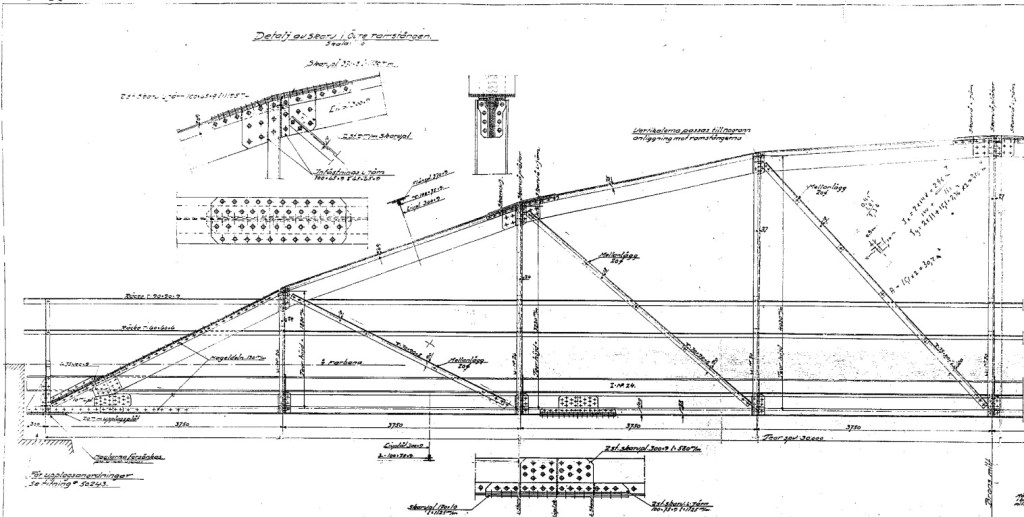
The search for more information continued through contact with the Swedish Transport Administration. A very helpful archivist produced the drawing. The drawing which was completed a week later on April 6, 1926. Drawing and subtitling are done by hand. The engineer has based his construction on the Royal Swedish Road and Water Agency’s standard drawings for road and railway bridges A17 and A20. I do not dare to interpret the engineer’s signature so his name will remain unknown. I wonder if he understood that the bridge would still be in use after almost 100 years. Here you can also read that the carriageway is made of wood. Load-bearing plank 4×4 inches and wear surface plank in the dimension 2×5 inches. 

I also received information from the Swedish Transport Administration that a renovation and reinforcement had been done in 1956. Wooden planks and steel parts were replaced. The drawing shows that “all wood except the wear plank is impregnated with arsenic and creosote preparations”. “New steel parts are coated with lead paint and coated twice with anti-corrosion paint”. Here too, we can see changes through the history of the bridge. The dimensions of the wooden plank are here stated in millimeters, 50×125.  

Lots of technology here so we return to the bridge’s beautiful appearance. Such engineering needs attention and I hope I got someone to look a little extra next time they pass. Maybe someone has been inspired to write a song about it.

Be a bridge over someones troubled waters, ha de Gött!

Advertisements

Candelabrum

Candelabrum

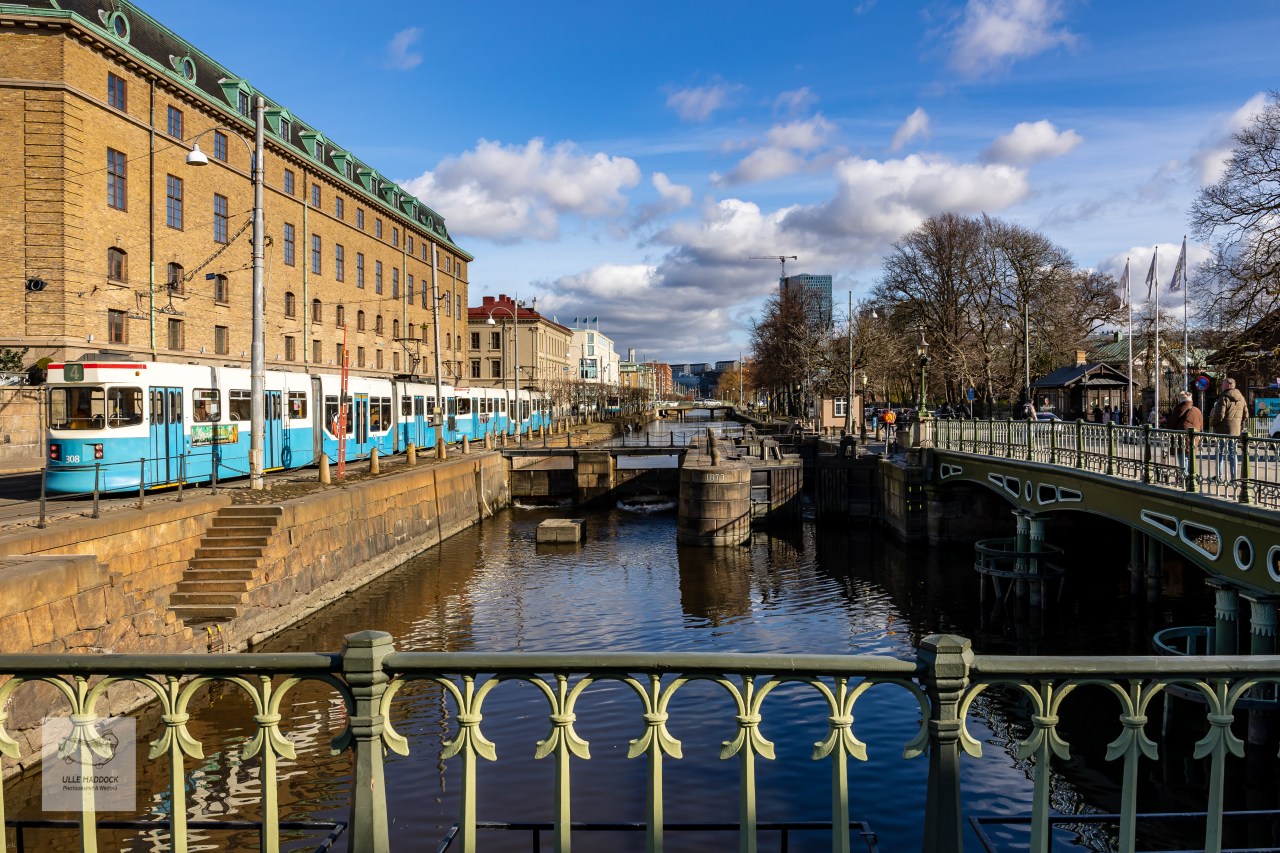
This huge candelabrum is one of several on the Kings Gate Bridge or ‘Kungsportsbron’ in Göteborg. It’s a bridge over the moat surrounding the old town. On this place in the fortified city was the Kings Gate before the walls was dismantled in the beginning of 1800. The candelabrum was iron cast for the current bridge in 1901 by Göteborgs Mekaniska Verkstad that later became Götaverken. The same company I accidentally accused for criminal activities in a previous blog (find it here). Originally lit by gas, but probably not from royal flatulence.

Let the light shine on you, ha de Gött!

Advertisements

Tractor

Tractor

This weekend was the start of the moose hunting season. Better stay out of the forest for a while. My father-in-law told me there was a veterans tractor day not far from home. I grabbed the camera and joined him.

It was a pleasant surprise to see all the tractor models from my childhood. Some in mint condition and some very much in daily use. There was the Volvo BM 230 with its characteristic sound from its two cylinder diesel engine, “ti-to, ti-to. Hence it got the nickname “Tisdag-Torsdag”, Tuesday-Thursday, but it doesn’t make any sense in English, sorry.

There was also Volvo BM 430 and Volvo BM 350. The 350 was also called Boxer from its three cylinder boxer diesel engine. I remember the acrobatic struggle to get in and out of the Boxer. The smell of wet soil and diesel filled the air in the mild autumn weather as the sound of strong diesels rang in my ears.

Grounded in dirt, ha de Gött!

Advertisements